
In the Leibniz Institute of Plant Biochemistry, the independent research group Receptor Biochemistry invites applications for a
Postdoctoral Researcher Position— Plant Membrane Biochemistry and Chemoproteomics (m/f/d) (10/2026)


Your area of responsibility
How does proteolytic regulation control plant plasma-membrane receptor function and plant immune responses?
The plant plasma membrane is a dynamic hub for nutrient uptake, pathogen detection and stress signalling, anchored by surface receptors. In animals, proteolytic cleavage of membrane proteins is a major regulatory mechanism in immunity. In plants, its role remains largely unexplored.
FRONTERA, funded by the European Research Council through an ERC Starting Grant, sets out to close that gap. The project combines chemoproteomics, cell biology, protease biochemistry and genetics, and looks at both sides of the process: the proteases that cut, and the substrates they act on. It is curiosity-driven research with a long view towards crop resilience and sustainable agriculture.
Your tasks:
You will lead the membrane biochemistry and chemoproteomics side of FRONTERA: establishing the preparations and the activity-based profiling needed to study proteases where they work, at the plant plasma membrane.
- Develop and optimise membrane preparation methods suited to downstream chemoproteomics
- Apply activity-based protein profiling and mass spectrometry to characterise membrane-associated protease activities, working with our in-house facility
- Relate biochemical findings to immune responses in planta, in collaboration across the group
- Co-supervise a doctoral researcher
- Present and publish your scientific data
Your profile
Essential
- A doctoral degree in biochemistry, plant science, molecular biology, chemical biology or a closely related field. If your thesis is submitted but not yet defended by the start date, please apply and tell us your timeline.
- Solid hands-on experience in protein biochemistry
- Real interest in method development, including tolerance for the weeks when a protocol refuses to work
- Interest in mentoring a doctoral researcher
- Excellent English language skills, written and spoken. German is not required.
Desirable
- Membrane protein handling, subcellular fractionation or membrane isolation
- Activity-based protein profiling, chemical probes or related chemical biology
- LC-MS/MS proteomics, from sample preparation to data analysis
- Work with plant systems, including transient expression
- Proteomics data analysis (MaxQuant, FragPipe, Perseus, R, Python)
- Supervision or teaching experience
Read the second list as a description of the project, not a test. Nobody arrives with all of it. Candidates who would do this job well routinely talk themselves out of applying because they match four points instead of six. If the science interests you and you bring the essentials, we would like to see your application. Tell us in your cover letter what you would need to learn.
We offer
- Modern Working Conditions: Comprehensive introduction to work techniques and a modern research environment with state-of-the-art equipment and up-to-date software
- Career Development: Targeted training opportunities and access to a specialized library with electronic resources and quiet workspaces
- Compensation & Security: Classification according to TV-L including annual bonus, pension scheme (VBL), health offers, and discounted canteen meals
- Ideal Working Environment: A varied and inspiring workplace in an international setting at a leading scientific and innovation hub
- Team Spirit and Leadership Culture: An open culture that strengthens teamwork, enables career networking, and promotes your research skills.
- Work-Life Balance: Flexible working models, remote work options, and 30 days of annual leave – for a balanced work-life experience.
Our benefits

Comprehensive introduction to work techniques and a modern research environment with state-of-the-art equipment and up-to-date software

Targeted training opportunities and access to a specialized library with electronic resources and quiet workspaces
Classification according to TV-L including annual bonus, pension scheme (VBL), health offers, and discounted canteen meals

A varied and inspiring workplace in an international setting at a leading scientific and innovation hub

An open culture that strengthens teamwork, enables career networking, and promotes your research skills.

Flexible working models, remote work options, and 30 days of annual leave – for a balanced work-life experience.
About us
The Independent Research Group Receptor Biochemistry, led by Dr. Mariana Schuster, is dedicated to understanding and engineering the molecular decisions that determine whether a plant gets sick, focusing on the proteases deployed by plants and pathogens and the proteins they cut. We are small, international and deliberately interdisciplinary. People here come from plant science, biochemistry, chemistry and computational backgrounds, and much of the useful thinking happens in the conversations between them.
The IPB is a non-university research institute of the Leibniz Association on the Weinberg Campus of Martin Luther University Halle-Wittenberg, a foundation under public law under the direct supervision of the state of Saxony-Anhalt. Around 200 people work here, including about 40 doctoral researchers, across four scientific departments and two independent research groups. Research at the IPB aims to understand the (bio)chemical basis of plant resilience and performance in challenging environments related to climate change. The IPB offers excellent research facilities and state-of-the-art infrastructure, including in-house mass spectrometry. More at ipb-halle.de.
Halle (Saale) is a green, walkable city with a large student population, low living costs by German standards, and fast connections to Leipzig and Berlin.
Contact person
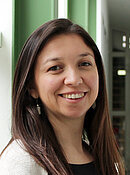
Dr. Mariana SchusterHead of Research Group
Telefon:
Mariana.Schuster@ipb-halle.de
Leibniz-Institut für Pflanzenbiochemie (IPB)
Weinberg 3
06120 Halle (Saale)
The Leibniz Institute of Plant Biochemistry is committed to equal opportunities, diversity and promoting a healthy work-life balance, and has been awarded the "Total E-Quality" rating for its efforts in this area. The IPB is also a member of the nationwide "Success Factor Family" corporate network and the Diversity Charter. Applications from severely disabled persons or applicants of equivalent status are expressly welcome. Further information on family friendliness, equal opportunities and diversity can be found at: www.ipb-halle.de/institut